
I don’t want to contribute negatively to anyone’s body image, but this guy has really teeny arms…
Author: Greg Scheer
Update 12/11/21: Sheet music for this song is now available at gregscheer.com.
Recently I recorded a pop punk retune of a hymn text by Bessie Porter Head. Naturally, the idea was met with some skepticism. Don’t let the style throw you off! Beneath the hood is a perfectly singable congregational song. How do I know? Because I taught it to my congregation this Sunday. By rote.
Sometimes communion takes longer than expected, so I always plan to have a few extra songs ready to go just in case. Normally I just call out a number for the people to look up in the hymnal. Other times I lead a song by rote–either something they’re likely to know by heart or a repeated call-and-response style song that doesn’t need written music.
This week I taught them the chorus of “O Breath of Life” by rote and then sang the verses for them. You can hear the congregation gain steam with each returning chorus. You see? Songs are just like people. Sometimes beneath a prickly punk facade is a placid heart of gold.
Update 10/2/20: Sheet music for this song is available here.
10 years ago, my friend Debra Rienstra wrote a hymn text based on Psalm 25, called “Foothold.” Not only that, she won the Fuller Seminary School of Psychology Fortieth Anniversary hymn competition with it. As I began to work on an upcoming service in which she, her bass/guitar playing husband Ron, and her jazz sax improvising son Philip would be playing, that song came to mind.
But I wasn’t wild about the KINGSFOLD tune that the text had been paired with. Don’t get me wrong–KINGSFOLD is a great tune. But it is overused: “O Sing a Song of Bethlehem,” “I Heard the Voice of Jesus Say,” “I Sing the Mighty Power of God.” The list goes on and on. More importantly, the tune seemed like the wrong vessel for this text. It moved too quickly to allow the deep inner life of Deb’s text to emerge.
So I, being the incessant musical tinkerer that I am, set about to compose a tune that would do the text justice while also allowing Philip to unleash his inner Coltrane. I’m always nervous about changing the music a poet originally heard in her ear, but in this case the poet gave me permission to share, so I must not be too far off base.
Want to play it at the piano rather than listening to Greg croon? See the link above for the PDF.
Update 12/11/21: Sheet music for this song is now available at gregscheer.com.
Every few months my friend Doug Gay emails new hymn texts he’s written, many of them Psalm settings. The latest was a setting of Psalm 104. He wrote the text with the 10.10.11.11 tune LYONS in mind (“O Worship the King”). It  scans well to this tune and the tune brings out the regal side of the lyrics, but the more I worked with the text, the more I realized they needed a foil that would lighten them rather than heighten their majesty. And since Doug is Scottish, what could be better than an airy Celtic tune?
I wrote the tune the day before a songwriting workshop in which I was slated to present one of my songs. I decided to throw caution to the wind and introduce this brand new song to that audience. It went very well except for the fact that I had made significant tweaks to the melody that morning and was having trouble singing the my finalized melody. But today I have a few hours to record a demo, making sure I got the melody right. Take a listen and tell me: do John Bell and Keith Getty really have a corner on the market of Celtic hymns?
Only 5 months after the fact, here’s a video from the concluding worship service at the 2016 Calvin Worship Symposium. I led the service with my Church of the Servant home team, which made it really special. http://worship.calvin.edu/resources/resource-library/new-heavens-and-new-earth/
New Heavens and New Earth from Calvin Worship Institute on Vimeo.
Some of my contributions (beyond my welcoming hand gestures):
- 5:20 Let the Spirit of the Lord Come Down (Nigeria, one that I arranged last year)
- 8:18 Sing Praise to the Lord (SweeHong Lim, Singapore, with a new string arrangement)
- 47:40 Canticle of the Turning with dance (I didn’t do anything, but I like what the COS dancers do with the song)
- 1:04:40 Abana In Heaven” (my GIA anthem, led by choir and sung by the whole assembly)
- 1:13:49 Fear Not, Rejoice and Be Glad (a new arrangement)
- 1:23:26 May the Love of the Lord (SweeHong, string parts I’ve been using for a few years)
In 1987* I wrote a 3 movement piece for brass quintet. If I remember correctly it won a contest and was played at a horn festival in New Hampshire. Also in the “if I remember correctly” department, it received its Michigan premiere at a 2006ish Calvin College composer’s concert. Here is the proof:
*1987? That was almost 30 years ago!
5,000 people receive GIA’s Choral Subscription Service, and each one will get the chance to review my two new anthems published by GIA, Abana, and Kwake Yesu. Pretty cool. Even cooler? The sample octavos are accompanied by recordings of each piece. They did a really nice job with these. Take a listen above. Then head over to GIA and buy the anthems to sing at your church.

Thank you.
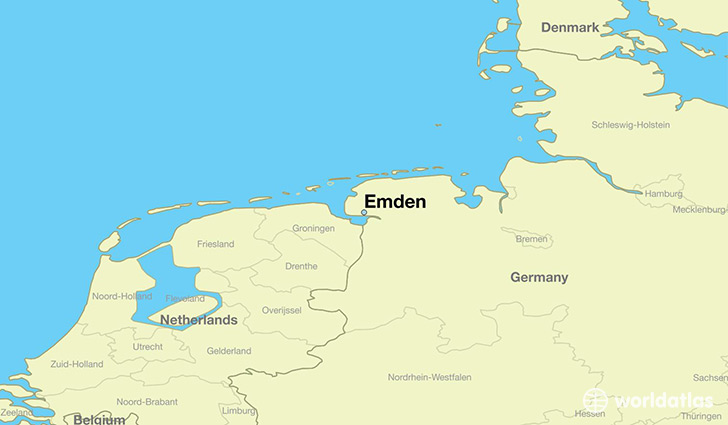
Just for fun, here’s a cellphone recording of my friend Cathrin Campo singing “In a Still, Small Voice” at a baptism service in Emden, Germany. If you would like to sing this song in your country, you can download the music for free, just like Cathrin did. Thanks for sharing, Cathrin!
Categories
O Breath of Life
Update 12/11/21: Sheet music for this song is now available at gregscheer.com.
What do I like about Bessie Porter Head? What’s not to like? I say. First, her name is Bessie,  which is cool in an old-fashioned way, and also rhymes with Nessy, the name of my favorite guitar (a red Ibanez hollow-body). Next, she was rockin’ the hair bun way back in the 1800s. Respect. Added to that, her last names almost make Portishead, a band you need to get to know if you’re not already fan. More to the point, for today’s blog post, she wrote a beautiful hymn text that talks about the Holy Spirit’s role in renew the Christian life and Church.
What do I like about punk rock? What’s not to like? I say. I was hooked from the minute I heard The Ramones, Iggy Pop, Mission of Burma and their pop punk progeny, Weezer, the Ataris, Green Day, et al. And I’d give a kidney to produce a song like The Atlantics “Lonely Hearts.” More to the point for today’s blog post, I was listening to Frank Black the other day and I wondered if punk might work for worship.
So I took it upon myself to give it a try. I present to you “O Breath of Life,” co-written by Bessie Porter Head and me.
Categories
Hammer on Wood
This song started as a seed of an idea about 4:30 this afternoon. Just the first two lines. Seven hours later the writing, recording, and mixing are done. There’s something about working quickly that releases you from the fear of perfection and the danger of over-thinking. Right now I’m digging the loose “Inside Me Wants Out” vibe. (Andy Pratt) We’ll see if I still feel that way tomorrow morning.
Stop checking your phone.
No one’s gonna call anymore.
You know you’re alone
when no one answers when you’re talking to yourself.
But what would you say?
You got what you deserve anyway.
You got what you gave:
an empty heart and an early bed (or early grave).
You took what you could;
packed your memories–some of them good.
Like hammer on wood it’s ringing
true and loud and hollow.
Stop checking your mail;
that endless binary sea but nobody’s there.
You pull in your sails.
You drift away, just drift away,
just close your eyes,
just close your eyes. This is your life.
Is this your life?
Or has it all been dreaming?
Have I been awake?
Or have I been sleeping?
Awake, asleep:
Always dreaming.
Stop checking your phone.
No one’s gonna call anymore.
You know you’re alone.
You know you’re alone.