This is, literally, my musical diary–notes fresh from my pen and recorded in a few hours. You can find my finished works elsewhere; here, it's all about capturing the moment!
Update 10/6/20: Sheet music for this song can be downloaded here.
“By Your Side” is song #2 in my Seven Last Words of Christ series. This one is based on Luke 23:43 “Truly, I say to you, today you will be with me in paradise.” We understand what these words mean when Jesus speaks them to a criminal dying next to him on a cross, but what do they mean for us today? In this song, we respond to Christ’s words with dedication: Yes, Lord, we want to be with you in life and death, in paradise or cross.
May we remain with you, Lord, when the day is o’er. For we desire nothing more than to be by your side, than to be by your side, O Lord.
Update 10/6/20: Sheet music for this song can be downloaded here.
This Lent, Pastor Nate is preaching a series on the seven last words of Christ. I’ve committed to writing a short song to follow each of the seven sermons. The first is Luke 23:34: “Father, forgive them, for they know not what they do.” With each of these songs, my goal is not to restate the words of Jesus, but to let people reflect on them. For this passage, I thought that a simple response of confession would be most appropriate.
1. Forgive us. Forgive us for the sins that we have done and the ones whom we have harmed. Oh, forgive us. Forgive us.
2. Forgive us. Forgive us for the ways we’ve caused you pain again and again. Oh, forgive us. Forgive us.
3. Forgive us. Forgive us for the sins we won’t forgive and the sins we won’t forget. Oh, forgive us. Forgive us.
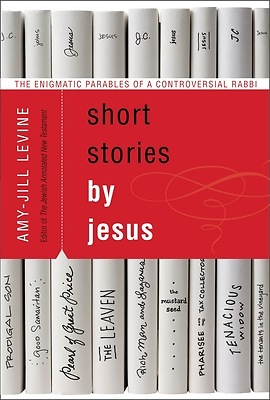
I’m reading the excellent Short Stories by Jesus: The Enigmatic Parables of a Controversial Rabbi by Amy-Jill Levine, and as I contemplated the parable of the prodigal son I tried to imagine what kind of song might be an appropriate response to the story. Here’s what I came up with:
The Father always calls to his beloved and welcomes the wanderer home. Leave this land of broken dreams; Leave your hunger, shame, and remorse. Come home, come home, come home, come home.
There is a recurring refrain in the book of Revelation: “Whoever has ears, let them hear what the Spirit says to the churches.” As Fuller Avenue Church worked through the letters to the churches of Revelation this fall I kept thinking that someone should write a song based on that passage. It’s the perfect prayer of illumination.
Three months, two false starts, and one new computer later, I decided that I should be the person to write that song!
As you can hear from the above demo, the song can be sung simply–a cappella or with guitar or piano accompaniment. But it can also be sung in canon, with as many as five voices singing simultaneously. (A singable chorus in five-part canon that doesn’t sound stodgy is no small feat. I hope you appreciate what I’ve done for you!)
If you can’t believe your ears, I invite you to look at the PDF.
Thanks to the work of my new friend Christopher Mazen, my translation/arrangement of “Kwake Yesu Nasimama (Here on Jesus Christ I Will Stand)” made its way to the International Baptist Church of Singapore. It’s not only a beautiful rendition of the song but very encouraging to see such a rich cultural exchange, from Africa to America to Asia.
Update 10/11/22: Sheet music for this song is now available at gregscheer.com.
This year, Church of the Servant (my “alma mater” church) commissioned me to arrange a lovely “Magnificat” by Keur Moussa. I don’t know a lot about the Keur Moussa Abbey, but my impression is that they are something like the Taizé of Senegal. The Keur Moussa community has developed its own style of singing that combines the beautiful austerity of Catholic chant with the insistent rhythms of West Africa.
If you listen to the original recording you’ll hear a simple perfection that is irresistible, with the vocals and rhythms held in perfect balance. You’ll also hear what I found most difficult about writing this arrangement: the more “interesting” my arrangement was, the more it betrayed the original song. I must have reminded myself a hundred times while working on it: “Greg, don’t gild the lily!” But it was not easy to remain simple when writing for choir, string orchestra, guitars, and a smattering of percussion!
In the end, I felt that I struck a good balance. The arrangement is complex, but not flashy; exciting, but still mesmerizing. But I am hardly an impartial observer. You be the judge. The above recording is from the December 15, 2019 premiere at COS’s annual Lessons & Carols service.
This fall I visited Baylor University, giving the “Hearn Innovator” lecture, speaking in classes, and enjoying rich conversations with students and faculty. One of my favorite events was leading a chapel of Psalm singing. The band was tight and the students were (mostly) enthusiastic. My part begins at 11:47.
Necessity is the mother of invention, and in the case of this Sunday’s service, I needed an arrangement of “Lead On, O King Eternal” for worship band. Henry Smart’s tune is triumphant, bordering on a march. That doesn’t work well with pop music instruments. So I softened the march rhythm and gave it a bit of a groove with a jangly electric guitar line a la early Elvis Costello. It might be the perfect blend of old and new; it might be an awkward marriage of substance and style. I will report back on how it works.
On October 28, I was privileged to lead Calvin University’s chapel with the Campus Choir. We focused on Psalm 103–my favorite–singing four different versions of the Psalm as a way of “preaching with song.” We sang Taizé’s “Bless the Lord My Soul,” Matt Redman’s “Ten Thousand Reasons,” and the classic hymn “Praise, My Soul, the King of Heaven.” We concluded with my anthem, “Bless the Lord, O My Soul!” which begins at 17:23. A good time was had by all. (As far as I could tell.)