Categories
Church Congregational Songs Demos

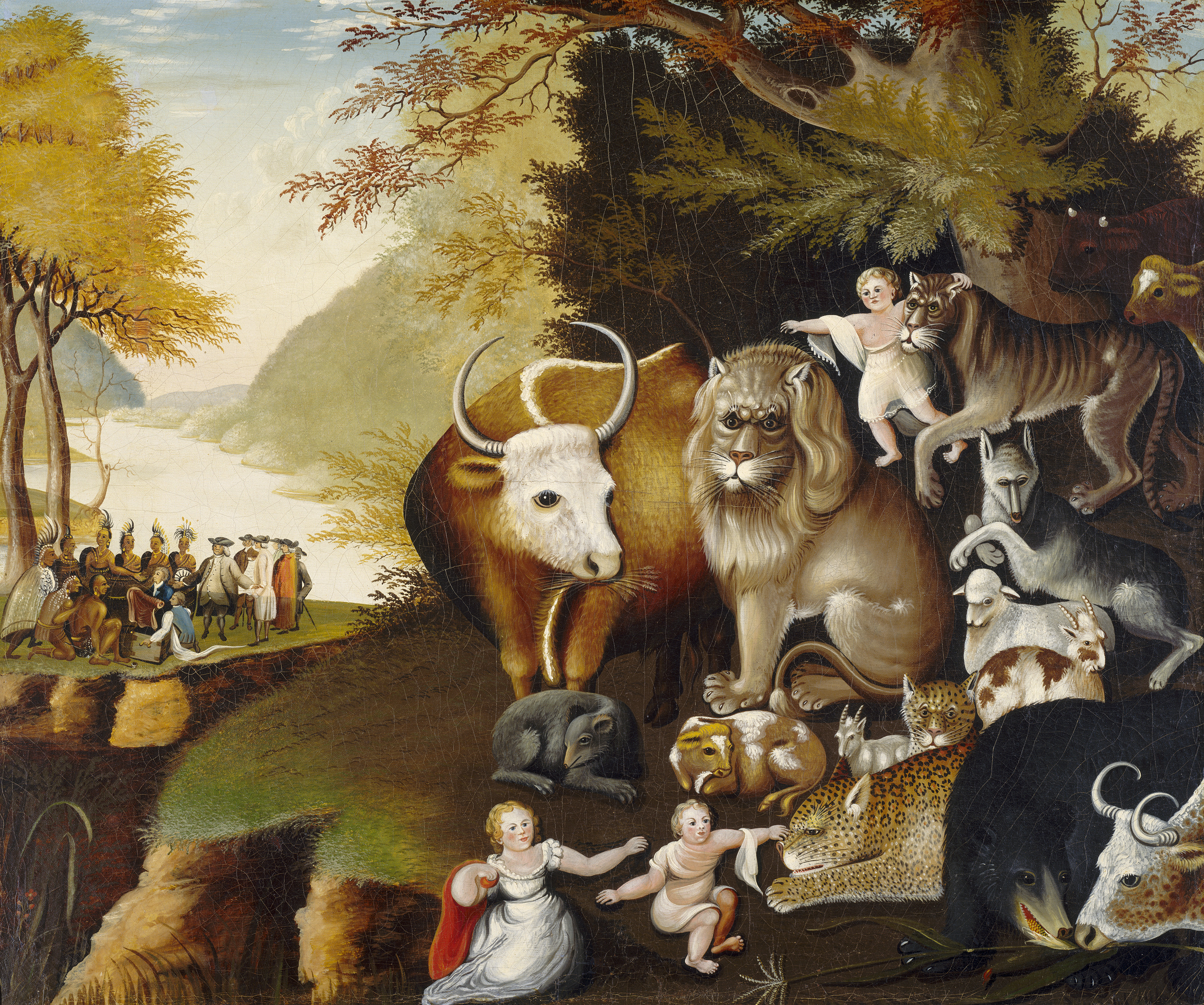
The Peaceable Kingdom

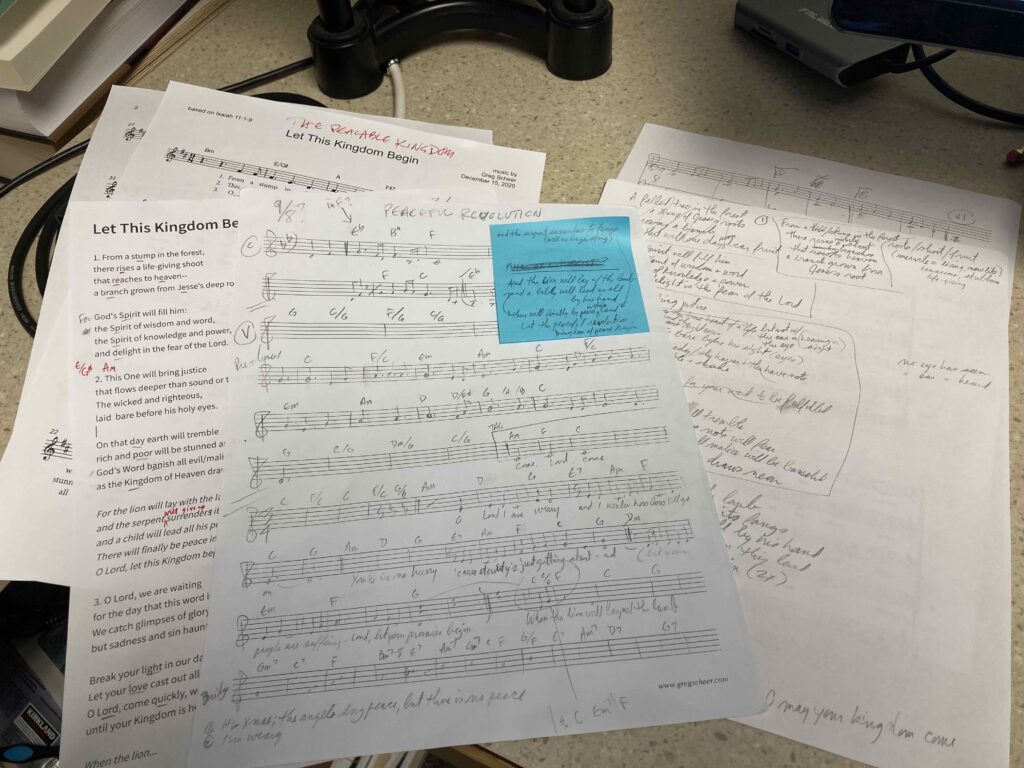
Lest you think songwriting is a simple, linear process…

This song started its life a few years ago at the Christmas songwriting retreat that produced Refugee King, Jesus Be Enough, and Tiny King. The page of sketches had “Peaceful Revolution” scribbled at the top, a phrase I still like. It remained in my ideas folder until this week when I realized it would fit perfectly in Fuller Ave’s virtual Lessons & Carols service.

“The Peaceable Kingdom,” like the Edward Hicks painting from which I borrowed the song’s title, is a rendering of the famous Isaiah 11:1-9 passage that describes predator and prey playing together, led by a little child. At Christmas, we understand this Child to be Christ, the little child who came into the world to usher in an age of peace. Of course, a quick look around shows that this peace is not yet fully consummated. Indeed, a second theme of Advent is preparing ourselves for the triumphant return of Christ, when the world will truly reflect Isaiah’s vision.

I hear this song as a diminutive sibling to “Peace in the Valley,” a song which I adore and have used with Isaiah 11:1-9 in Lessons & Carols past.

1. From a stump in the forest,
there rises a life-giving shoot
that reaches to heaven–
a branch grown from Jesse’s deep root.

For God’s Spirit will fill him:
the Spirit of wisdom and word,
the Spirit of knowledge and power,
and delight in the fear of the Lord.

2. This One will bring justice
flowing deeper than sound or than sight.
The wicked and righteous,
laid bare before his holy eyes.

On that day earth will tremble
rich and poor will be stunned as they hear
the Word of God banish all malice
as the Kingdom of Heaven draws near.

For the lion will lay with the lamb
and the serpent will surrender its fangs,
and a child will lead all his people by the hand.
There will finally be peace in this land.
O Lord, let this Kingdom begin.

3. O Lord, we are waiting
for the day that this word is fulfilled.
We catch glimpses of glory
but sadness and sin haunts us, still.

Break your light in our darkness
Let your love cast out all fear.
O Lord, come quickly, we’re waiting
until your Kingdom is here.

For the lion will lay with the lamb
and the serpent will surrender its fangs,
and a child will lead all his people by the hand.
There will finally be peace in this land.
O Lord, let this Kingdom begin.

When the Lion of Judah comes again,
the Lamb of God will take away the world’s sin,
and the serpent will surrender to God’s holy reign.
O Lord, let this Kingdom begin.
Come, quickly Lord, amen.

Categories
Church Congregational Songs Demos Hymn tunes Psalms

Psalm 53: Fools Deny Their God within Them (Carlill)

I returned to Adam Carlill’s excellent Psalms for the Common Era to get his take on the difficult Psalm 53. This Psalm (and its nearly identical twin, Psalm 14) is full of rancor, claiming that foolish humans are godless, corrupt, and warring, and will eventually face God’s wrath, their scattered bones telling the tale of their judgment. Heavy stuff. Adam’s metrical rendering of this Psalm retains its themes but uses language that allows us to enter into it more easily.

I decided to accompany the text with Baroque-flavored music. It’s outside the norm of congregational songs, but I think it’s quite singable. The melody is relatively simple, while the harmonies and bass line scurry around it with all the fury of Psalm 53’s evildoers. I especially like how the final half verse shifts to a major key, letting the accusations and anger of the previous verses give way to a final note of hope.

Sheet music is available here.

Fools deny their God within them,
while they work unrighteous mayhem;
there is no-one virtuous.

Then our God from heaven descended,
and our nature comprehended:
was there thought or thirst for God?

All have gone astray together,
fraudulent in their endeavour,
no-one upright here at all.

Wicked-doers have no knowledge,
as they swallow those in bondage.
They do not proclaim their God.

All the wicked shall be daunted,
and by fear and terror haunted,
shattered bones and empty camps.

You, my God, have scorned the vicious,
and their cruel, vain, ambitious
plans; you have rejected them.

Who will give relief from Zion,
freeing captives from their prison?
May his people all rejoice!

Categories
Church Congregational Songs Demos Psalms

Psalm 6: Lord, My God, Do Not Contend (Carlill)

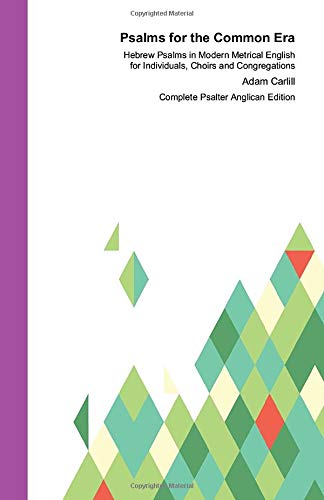
A few weeks ago, a friend recommended Psalms for the Common Era, a collection of 150 Psalm versifications by Adam Carlill. It is a lovely collection that strikes a fine balance between faithfulness to the Hebrew texts and singability for modern congregations.

Of course, the best way to become familiar with a hymn text is to set it to music! I began with Psalm 6, which is one I’ve never set to music before. I wrote a Celtic-style ballad, which feels to me like it’s sturdy enough to contain the harsher elements of the Psalm (“do not castigate and chide,” “Turn away from me my foes” ), but soft enough for phrases like “soothing touch and balm inside.”

I’m sure I’ll be writing more songs using Adam’s texts. In the meantime, visit his website and get the book for yourself!

Sheet music is available here.

Categories
Church Congregational Songs Demos Retuned hymn

I Will Not Let You Go

Samuel Medley, 1738-1799

What do you do when your pastor decides to preach on Genesis 32:22-31? Sure, the story of Jacob’s late night wrestling match with a stranger (man? angel? God?) is a common Old Testament story, but there simply aren’t a lot of song options for it.

As I scoured my resources for appropriate hymns (using keywords like “wrestle,” “blessing,” and “dislocated hip”) I stumbled across a hymn text written by Samuel Medley, a rarely sung author of dozens of hymns. This little gem encourages us to follow Jacob’s lead, holding onto God with all our might and not letting go until we are named and blessed by God.

Story songs like this always feel to me like they need a folk melody, so I wrote a tune that might fit in among classic American melodies like those found in Southern Harmony. With its AABA form and limited range, it will be easy to learn and remember. Come to Fuller Ave CRC this Sunday (virtually) and find out if I’m right!

1. As Jacob did in days of old, so will my soul do now; 
I’ll wrestle and on Jesus hold, and will not let him go. 
Like Jacob, I am weak and faint, and overwhelmed with woe: 
Lord, hear and pity my complaint, for I won’t let you go. 

2. I come encouraged by your word, that mercy you will show;
except you bless me, dearest Lord, I will not let you go. 
I come to ask forgiveness free, though I have been your foe; 
except you grant it, Lord, to me, I will not let you go. 

3. I come to tell you of my fears and conflicts here below; 
unless your mercy, Lord, appears, I will not let you go. 
And so I’ll wrestle while I live, a pilgrim here below; 
and when in glory I arrive I will not let you go. 

Categories
Art Music Demos

#5 (piano miniature)

In 2019, I started a series called Piano Miniatures. I had planned to write 14 short pieces, each with a corresponding meter (i.e. #7 would be in 7/8 time). I finished four of them, and ever since, a lonely sketch for #5 has been languishing in my draft folder until this week.

This new piano miniature is in 5/4 meter and has some harmonic bite to it, so you’d expect it to sound harsh or complicated. Instead, it is a dreamy musical vignette reminiscent of Debussy’s “Reverie.” And though it’s lacking Debussy’s musical genius, I’m still quite fond of it.

Pianists, I’d love you to give it a try: PDF.

By the way, this piece marks a musical milestone: It’s the first piece I’ve typeset in the Dorico notation program. After using Finale for almost 30 years, I think it may be time to jump ship. Dorico is a promising newcomer and I’m committing to learning it. If you notice a substantial improvement (or downgrade) in the look of my scores, let me know. (‘Cause I know you all care a lot about that…)

Categories
Church Commissions Congregational Songs Demos Hymn tunes

By Blessed Wounds (T.L. Moody)

Update 2/4/22: Sheet music for this song is now available at gregscheer.com.

Tammy Moody wrote a lovely text about trusting God to be a good father rather than a vengeful or cruel one. She and I have discussed the fact that using the image of God as Father is quite out of fashion in some circles. There are good reasons: Some people have had horrible experiences with their earthly fathers that cause barriers to them approaching God as Father; also, we should be exploring the full range of images and titles the Bible uses for God. I like how Tammy approaches it, though. She recognizes God as Father, while also acknowledging the fear and doubt many of us have in believing we’re children, accepted and loved by a good Heavenly Father.

I composed a simple pentatonic melody to support the words–almost a lullaby. There are echoes of “Here Is Love, Vast as the Ocean” (the tune Tammy had in mind when she wrote the text), but with a more sweeping melodic arch that allows the second half of the song greater emotion. The first two times the apex of the melody asks the unanswered question, “Dare I come to you?” and the third time it declares tentatively, “I will come.”

1. Dare I come to you as Father,
when by shame I am consumed?
Through the spotless Lamb’s atonement
dare I come by blessed wounds?

Dare I come to you, as Father
when my faith has taken wing?
I’ve no gifts of gold or silver.
Doubts are all I have to bring.

2. Though your child, your dear, beloved,
and with you I’m not alone,
still, my fears arise, O Father,
born on tears before your throne.

Dare I come to you, as Father
when my faith has taken wing?
I’ve no gifts of gold or silver.
Doubts are all I have to bring.

3. Tell me, once again, O Father
how my soul you’ll ne’er dis-own;
How in Christ I am forgiven,
saved by works, not of my own.

I will come to you, my Father,
though by shame I am consumed.
Through the spotless Lamb’s atonement,
I will come by bless-ed wounds.

Categories
Church Congregational Songs Demos Hymn tunes

Ask the Complicated Questions (David Bjorlin)

It seems that Dave and I grew up in similar church contexts, where easy answers were dished out with as much relish as jello salad at a Sunday potluck. Unfortunately, those easy answers overlooked the subtleties of real life, used the Bible to confirm preexisting beliefs, and required complete agreement to stay in the club.

Dave’s hymn “Ask the Complicated Questions” assumes that God is big enough to handle our questions, doubts, and disagreements. That’s a breath of fresh air.

Because the song deals with the uncertainty of seeking truth in a sometimes perplexing world, I chose an understated melody that moves in many different directions and never quite comes to rest. It’s this lack of resolution that urges Dave’s words forward.

As I was writing this song, and again as I was recording it, I was reminded of T Bone Burnett’s quirky classic, “Madison Avenue.” I’ve included it below.

1. Ask the complicated questions,
do not fear to be found out;
for our God makes strong our weakness,
forging faith in fires of doubt.

2. Seek the disconcerting answers,
follow where the Spirit blows;
test competing truths for wisdom,
for in tension new life grows.

3. Knock on doors of new ideas,
test assumptions long grown stale;
for Christ calls from shores of wonder,
daring us to try and fail.

4. For in struggle we discover
truth both simple and profound;
in the knocking, asking, seeking,
we are opened, answered, found.

Text: David Bjorlin, b.1984; © 2018 GIA Publications, Inc.
https://www.youtube.com/watch?v=ecTJZ6biZE0
Categories
Church Congregational Songs Demos Hymn tunes

Build a Longer Table (David Bjorlin)

Update 3/4/22: You can now download the sheet music for this song at https://gregscheer.com/product/build-a-longer-table/

I met Dave Bjorlin at a Hymn Society conference in 2018 in a late-night chat among HS night owls. “Good guy,” I thought. What I didn’t know is that he’s an excellent hymn text author. GIA recently published a collection of his texts, Protest of Praise. It’s full of fresh hymns that address modern injustices.

Dave asked me if I’d consider writing some tunes for texts in the collection. How could I say no? I began with “Build a Longer Table.” This poke-in-the-eye of a hymn is aimed at Christians who want to exclude “those people.” Dave shows that God’s incredible welcome to us through Christ requires us to show hospitality to others.

It was originally paired with the tune NOËL NOUVELET (“Sing We Now of Christmas”). I decided it needed something bolder and more of a proclamation. My tune is an exuberant Gospel groove that declares the text with strength and joy.

1. Build a longer table, not a higher wall,
feeding those who hunger, making room for all.
Feasting together, stranger turns to friend,
Christ breaks walls to pieces; false divisions end.

2. Build a safer refuge, not a larger jail;
where the weak find shelter, mercy will not fail.
For any place where justice is denied,
Christ will breach the jail wall, freeing all inside.

3. Build a broader doorway, not a longer fence.
Love protects all people, sparing no expense.
When we embrace compassion more than fear,
Christ tears down our fences: all are welcome here.

4. When we lived as exiles, refugees abroad,
Christ became our doorway to the reign of God.
So must our tables welcome those who roam.
None can be excluded; all must find a home.

Text: David Bjorlin, b.1984; © 2018 GIA Publications, Inc.

Categories
Church Congregational Songs Demos Pilgrim Psalms Psalms

Psalm 134: Bless the Lord!

The biblical Songs of Ascents, and my Pilgrim Psalms song series, conclude with Psalm 134. It is a fitting conclusion, with the people blessing God and God blessing the people.

I could have written a simple scripture song that rhymed, but I felt that might lock it down too much. Instead, I let the text flow freely, setting the words to a melody that can be sung in canon. (That is, a round.) While this sounds like it betrays my goal of writing 14 songs that are singable without instruments or written music, the result is quite singable. In fact, I would love to try “lining out” this song–the leader sings the melody and the people sing back what they hear–as a two part round.

In the coming weeks, I’ll assemble all 14 Pilgrim Psalms into a playlist and make the leadsheets available at my website.

Bless the Lord, all you servants of the Lord.
And bless the Lord, those who minister to God throughout the night.
And bless the Lord, with the lifting of hands in God’s holy place.

May our God, the creator of the heavens and earth, bless you;
May God bless you.
May God bless you.
Bless you.

Categories
Church Congregational Songs Demos Pilgrim Psalms Psalms

Psalm 133: How Good and Beautiful

Psalm 133 is the quintessential ode to the unity of God’s people. It is short, beginning with a thesis statement (“How good and pleasant it is when God’s people live together in unity!”) and fleshed out with two supporting images. Both images, anointing oil and mountain dew, are signs of God’s blessing.

I have set Psalm 133 to music three times in the past, each time with a co-writer. This time I decided to move away from the sweet renditions one normally hears. The fact is that when it comes to the communion of the saints the devil is in the details! Things are not always sweet between God’s people. It takes a lot of work–even fighting–to achieve the kind of unity that Psalm 133 describes. I decided music that was rougher and more muscular would be appropriate for the song’s message.

How good and beautiful
when all God’s family lives
in precious unity.
How good it is.

1. It’s like oil flowing down,
it’s like oil flowing down. CHORUS

2. It revives like morning dew,
it revives like morning dew. CHORUS

3. It’s God’s blessing flowing down,
it’s God’s blessing flowing down. CHORUS

Oh, how good it is.
Oh, how good it is.


Recording note: The inspiration for my arrangement on this recording was the Malian guitarist Ali Farka Touré. Of course, I don’t come anywhere near his prowess. Do yourself a favor and take a listen to the real thing: