Once again, this song is not new to my blog, but this is a new recording. And as a Psalms for All Seasons reject, it fits squarely in this series of Killer B posts: MP3.
Category: Congregational Songs
Update 10/1/20: Sheet music for this song can be downloaded here.
I’ve blogged about “Sing to God” previously (and shortly after that), but I thought I’d let you hear it again. I still like this tune quite a lot. Evidently the editors of PfAS didn’t. (To be honest, I can’t remember if I submitted this one.) In #30C they paired this text with the Jewish tune YISRAEL V’ORAITA, which is actually a pretty nice fit.
One of the things I do to keep myself honest is to let choirs sight read my music without the warnings I often give before before rehearsing a new piece: “watch out for the harmony in measure 5” or “that rhythm in the chorus goes da daa da doo da.” If the choir stumbles on something, there’s a good chance the congregation will find it tricky.
That’s just what I did during this reading session. The twists and turns in this one caught the choir off guard, as evidenced by the laughing in verse 1. But by verse 3 they got those wrinkles ironed out: MP3.
This choral/congregation setting of Psalm 13 began its life as Alas! And Did My Savior Bleed (which, by the way, I think you should sing in your church this upcoming Lent). When TCS and I were doing the initial reading sessions, I decided that the arrangement of the tune MARTYRDOM would fit both texts. This tune and text combination appear in Psalms for All Seasons, but not this arrangement. You can only get that right here: MP3.
Update 10/6/20: Sheet music for this song can be downloaded here.
Next week, Psalms for All Seasons, a collection of a gazillion Psalm settings, will be given to every one who attends the Calvin Worship Symposium. Cry Out to God!, an accompanying CD made in collaboration with The Choral Scholars and a host of other friends, will also be released next week.
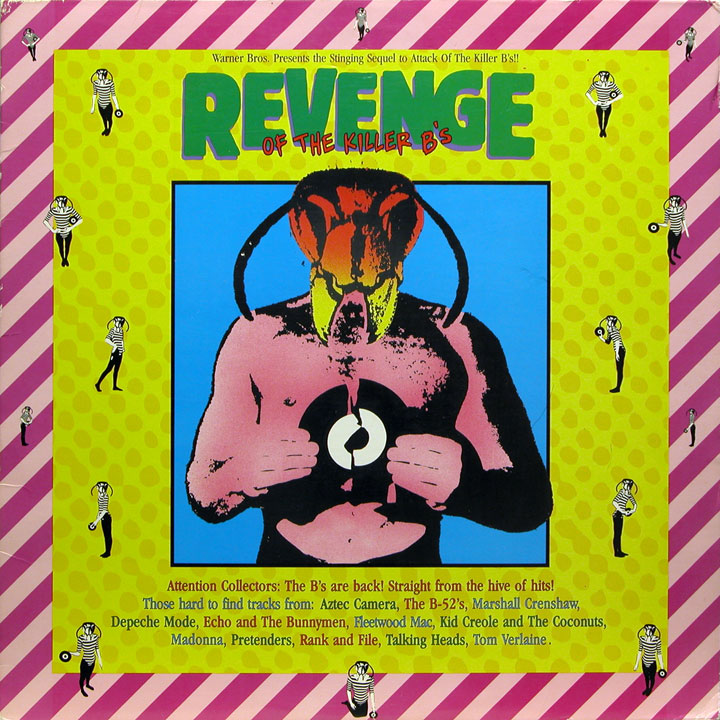
I’ve spent the last six months rehearsing, recording, and mixing this CD’s 22 songs. Along the way a number of songs have fallen by the wayside. In honor of the release of PfAS, I’m going to make a number of these songs available at my blog. You could call these songs “also rans,” “runner ups,” “the despised and rejected”; I call them Revenge of the Killer B’s in honor of an LP of the same name, which was a collection of B-sides* from various 80s artists.
First up is my setting of Psalm 5, “Hear My Words, O Lord.” It appears as Psalm 5C in the Psalms for All Seasons hymnal, but if you want the unsquished piano part you hear on this recording, see the link above. The recording is just a rough read through of the refrain without the reading. The reading allows the whole Psalm to be heard, and really lets the multiple voices of the original text come through.
*The back side of a single–if you don’t understand what I’m talking about, ask an old person.
I found an MP3 on my computer the other day, and to tell you the truth I don’t know what it’s from. It’s my arrangement of “Praise to the Lord, the Almighty” that includes the added refrain “Praise the Lord, O My Soul.” I’m pretty sure it’s played by Church of the Servant’s Guitarchestra, because it features the soulful accordion stylings of Kurt Schaefer. But is it a service recording? Something I recorded during rehearsal? I really don’t know.
But I liked its relaxed vibe, so I thought I’d share it: MP3
You can find a list of my hymn arrangements here. I’m in the process of uploading the whole lot to hymnary.org, but I will accept email requests in the meantime.
Christ Has Died
Churches of a liturgical bent usually include the “memorial acclamation” as part of their communion liturgy. The leader says “Let us proclaim the mystery of faith” and the people respond with “Christ has died. Christ is risen. Christ will come again.” This not only makes for good liturgy, but is a profound miniature creed.
Here, both parts are sung. The introduction is given to the leader–probably a cantor/soloist, but it’s wonderful when a pastor/priest is able to sing the liturgy. The acclamation is sung first by the choir (in this case a choir of Gregs) and then repeated by the congregation (of Gregs).
The Body of Christ
As I worked on Cardiphonia’s Songs for the Supper project, I wrote lots of sketches before settling on “O Lamb of God” as the one I’d record “for real.” I recently got a chance to complete and record a few of the other ideas. The first is “The Body of Christ.”
In many churches, passing of the communion elements is accompanied by the words “The body of Christ, the bread of heaven” and “The blood of Christ, the cup of salvation,” to which the recipient answers “Thanks be to God.” Here are those words in musical form. I imagine the song being used as a meditative refrain that the congregation can sing while passing the communion elements, similar to Taizé’s “Eat This Bread.” I plan to write Taizé-style descants as well. The first blog reader who schedules this song for a service and requests the descants (with a few days’ notice) gets them for free!
The First Nowell
What better time to premiere a new arrangement than on Christmas Eve just before the stroke of midnight? Indeed, last night saw the unveiling of an arrangement of “The First Nowell” for solo, guitar, strings and piano.
It’s been something I’ve been meaning to do for a long time. “The First Nowell” is a classic folk tune, but the arrangement in most hymnals fetters the flowing melody with four part harmony. People, homophony is not the right solution for every song! But enough ranting. My approach was simple: let the melody sing itself and support it with an accompaniment that keeps things moving forward. After a brief string intro, I start small–just guitar and solo voice–and then build momentum over the song’s 6 verses. Take a listen to the MP3 from last night, then email for a score so you can premiere it in your town next Christmas.
By now y’all are probably sick of hearing about the Psalms of Ascent series at Church of the Servant. Sorry…
A few weeks ago Psalm 129 came up. Now, if you search hymnary.org for, say, Psalm 8 or 40, you’ll get around 60 hits. And most of them will be viable options. But if you search for Psalm 129, you’ll get two hits. And one of them is “Those hating Zion have afflicted me.” That makes for some tough going if you’re a worship planner trying to plan a service around Psalm 129.
I looked in my bag of tricks (the “bag” in this case is my file folders and google doc of the 150 Psalms) and found a song Bruce Benedict had written using the words of Isaac Watts. The song really grew on me. Psalm 129 is not an easy sell, but this musical setting of it made it feel somehow like the timeless struggle of good versus evil. The Psalm is essentially saying “The MAN (and you know who you are) has pushed me down since the day I was born, but he’s gonna get his in the end, because God’s on my side.” That’s the kind of sentiment that we cheer in a film about a triumphant underdog, but it makes us uncomfortable when we read it in the Bible.
Bruce’s original version has an ethereal, lament vibe, whereas mine is more angry, fight the man take on the music. I don’t know if this is a reflection of the difference between Bruce’s and my character, but it just kind of came out that way. It also came out as a full-blown arrangement with string quartet, piano and guitar. Pretty epic stuff. I described it to my pastor like this: “Imagine a film directed by Clint Eastwood in which a man exacts vengeance on the murderers of his family. This is the music that plays as he walks slowly out of town, with his gun still smoking in its holster.”
Take a listen to the MP3 of COS singing it a few Sundays ago, or geek out with the PDF full score.
I don’t know who Alexandra Fisher Willis is, but she’s written a beautiful Advent text, “Long-weary Earth in Darkness Groans.” From what I gather, she’s in Lester Ruth’s Theology of Songwriting at Duke Divinity, and she wrote this as one of her assignments. Dr. Ruth, give this woman an A+!
Alexandra wrote this text to the tune LASST UNS ERFREUEN (“All Creatures of Our God and King,” etc). This is a perfectly good choice. It is a tune that the Church has sung and cherished for many years–388 to be exact–but somehow I don’t feel the weight of history like perhaps I should.
I wrote a new one: MP3.