This is, literally, my musical diary–notes fresh from my pen and recorded in a few hours. You can find my finished works elsewhere; here, it's all about capturing the moment!
Last year I attended a songwriting retreat that focused on writing Christmas songs for too often overlooked themes. Great writers like Liz Vice, Matt Papa, Eddie Espinosa, and Latifah Alattas applied their skills to theological ideas like the union of heaven and earth in the person of Christ and the dark side of the Christmas story such as the slaughter of the innocents and the flight to Egypt.
It was at this retreat that I wrote “Jesus, Be Enough.” In the year since, I’ve wondered what this song wants to be when it grows up. Now, just in time for Christmas, it has decided that it would like to be a choral anthem! Above, you can listen to a rough demo I recorded at choir rehearsal this evening. To download it for your choir you can visit my website: https://gregscheer.com/product/jesus-be-enough/.
The sermon at Fuller this week comes from the story of Moses’ birth and adoption by Pharoah’s daughter (Exodus 2:1-10), exploring Moses as a foreshadowing of Christ. As I looked for appropriate songs to sing, I came across a once-popular hymn by William Hammond called, “Awake and Sing the Song.” This hymnic rabbit trail led to the original 1745 publication of Hammond’s poem that featured no less than 14 verses! The rabbit trail continued to Revelation 15:2-4 in which the harp-wielding saints sing the “song of God’s servant Moses and of the Lamb.” Pure worship planning gold.
The Ghent Altarpiece: Adoration of the Lamb (1425-29)
Naturally, I felt the need to write a new tune for it–it’s who I am. I knew the text called for a tune as rough as a sea chanty, as epic as a murder ballad, and as joyously raucous as a shape-note hymn. What I came up with is a pentatonic melody that is equal parts “What Wondrous Love” and “Roland the Headless Thompson Gunner.” I’m quite pleased with it. (And that’s not always the case after singing a dozen takes of a new melody while recording a demo.) I was also pleased that I was able to work in my favorite phrase from the original hymn, “we, his miracles of grace.”
The one remaining question: does it need a chorus? Musically, it feels complete without it, but thematically we are being called to sing the song of Moses and the Lamb, but we never do. The actual song appears in Rev 15:3-4:
“Great and marvelous are your deeds, Lord God Almighty. Just and true are your ways, King of the nations. Who will not fear you, Lord, and bring glory to your name? For you alone are holy. All nations will come and worship before you, for your righteous acts have been revealed.”
I have a chorus drafted. If enough people request it, I’ll add it.
This Sunday at Fuller Ave, Nate was preaching from 2 Corinthians 13:11: “Finally, brothers and sisters, rejoice!” The service was all about joy, so we decided the praise set should be a rambunctious Sunday School Singalong.
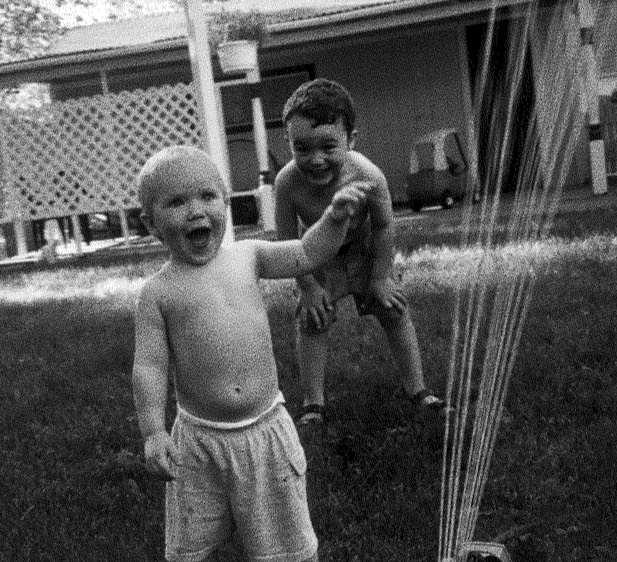
A scene of pure joy from my favorite boys.
On a long bike ride the day before the service I got to singing a little ditty inspired by NRBQ’s “Down in My Heart.” Nothing deep, just a tune full of joy. I was enjoying it so much that I stopped on the side of the road and sang it into my cellphone just in case I forgot it!
The next day I introduced it to the congregation. It fit beautifully alongside “This Is the Day,” “Rejoice in the Lord Always,” and “I’ve Got the Joy, Joy, Joy (Down in My Heart).”
Fuller Ave CRC is in the middle of a sermon series called “Love Your Neighbor.” What better hymn could be sung than Adam Tice’s “The Church of Christ Cannot Be Bound”?:
Adam M. L. Tice
The church of Christ cannot be bound by walls of wood or stone. Where charity and love are found– there can the church be known.
It is sung to a variety of tunes. My favorite is the rousing MCKEE (In Christ There Is No East or West). But since the sermon series runs for ten weeks Pastor Nate and I decided to use a different tune each week.
Enter my new tune, BRIDESMAID.* Though I rocked it out in the above demo, it was conceived as a simple folk song in the tradition of 60s protest songs like “The Times They Are A Changin” or “If I Had a Hammer.” Send me an email if you want the leadsheet. I’ll check with Adam to see if it’s alright to distribute.
*Why BRIDESMAID, you wonder? This is actually the second tune I’ve written for this text. I decided to retire the first. “Always the bridesmaid and never the bride.” And with that, I shall get cleaned up for Matt and Larissa’s wedding, where I’m sure both bride and bridesmaid will be perfect!
Update: For sheet music or to adopt this orphan tune, head over to gregscheer.com.
You probably know Harry Plantinga and me as the duo who co-founded Hymnary.org. As of a month ago, though, we are also a musical duo–a veritable hymnological Lennon and McCartney.
Harry wrote a Transfiguration hymn based on Luke 9:28-36 that needed a tune. I suggested my tune GILLIGAN (published in the hymnal In Melody and Song and also available at my website). After the text and tune pairing was finalized, he decided to use it as a test case for a new hymn presentation software he’s developing with Hymnary.org. You can try this “scroll-view” prototype here: https://rh.hymnary.org/history/v0.1.html (press “m” on your keyboard to start the demo) or click on the link below to read the full text.
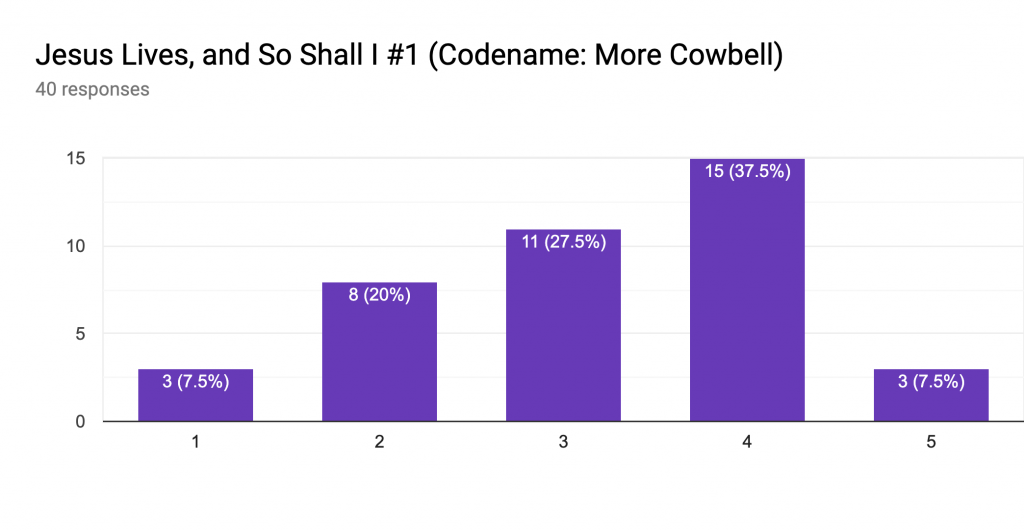
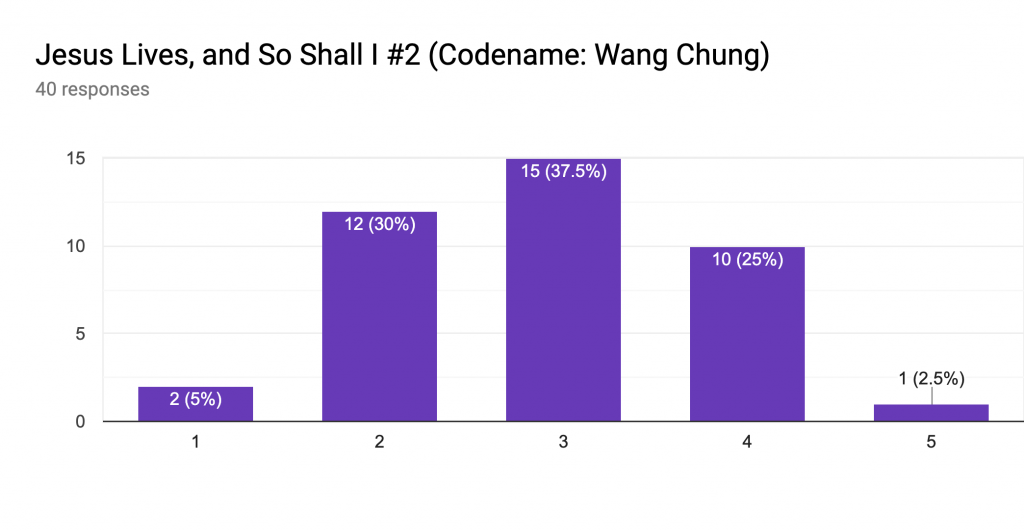
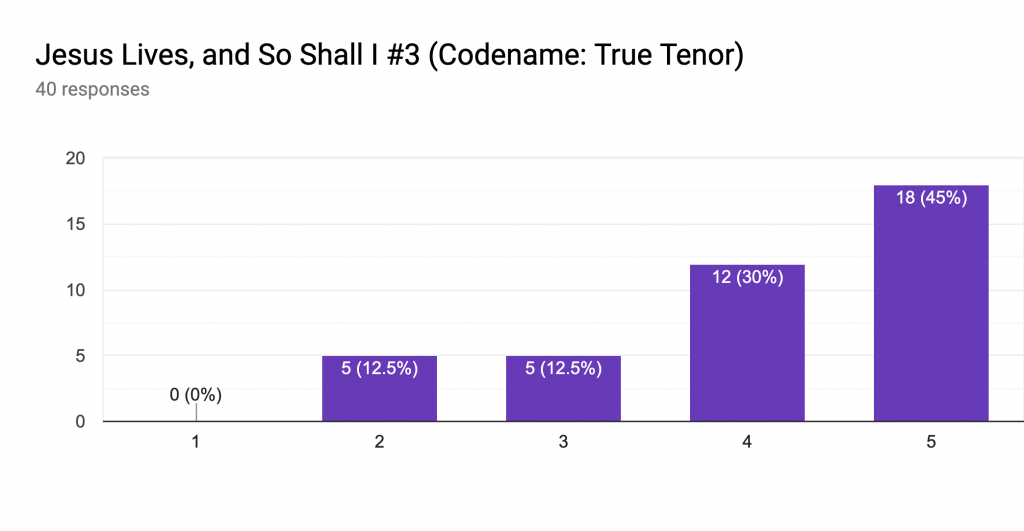
The people have spoken, and the people have decided that “True Tenor” is the most worthy tune to be paired with the lyrics “Jesus Lives, and So Shall I.” For those of you who like statistics, the voting results are below. For those of you who like music, you can print this PDF leadsheet and sing the song in your congregation on Sunday!
The people said: #1 has a melody that I could sing comfortably right away. // #1 just sounded a little dated to me. // One thing that turned me away from the More Cowbell version was the way the rhythm makes me hear “so shall I” –> as “social eye.” Once I get something like that in my head, it’s hard to let it go. 🙂 // It sounds a little like Eagle Eye Cherry’s “Save Tonight.”The people said: A bluegrass house banger // I like the country/folk feel of #2. // You had me at Wang ChungThe people said: #3 has a reverence that I am drawn in by. // I can imagine #3 in a church setting more than the others because it is more similar to other songs // #3 is more reverent // I like the energy of the first two, but the third is the one that connected with me the best. Its the one I that made me think about the words, and the one that hit my “worship time” nerve.
Here are some of my favorite general comments:
The good news is that I can totally see each of the arrangements being used at different churches. The bad news is that you sound nothing like Chris Tomlin.
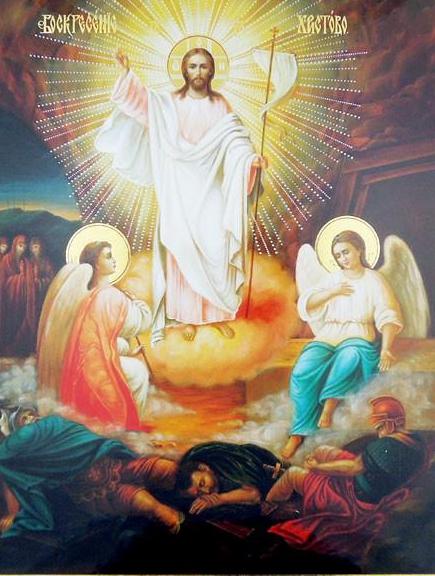
You need to use another cover pic. This one is nice but perpetuates the White Jesus myth. [Interestingly, this comment came in while I was at a cultural bias workshop where we spent time discussing this very issue.]
Nope. I hated them all and wish I could take back the time I spent listening to them to take the nap I was going to take.
Joanna says “I think one of them should be disco inferno.” So there is some solid feedback from a four-year-old. [My business manager’s daughter has sophisticated taste in pop music!]
1. Jesus lives, and so shall I.
The sting of death is gone forever.
Jesus lives— the One who died
the bands of death to sever.
God has raised me from the dust:
Jesus is my hope and trust.


2. Jesus lives! My soul revived
when Jesus called. I was awakened
from my sleep to glorious light;
the shroud of death He's shaken.
From the grave God raised me up:
Jesus is my hope and trust.


3. Jesus lives! New life begins
within this heart so long in slavery.
From the crushing weight of sin,
God’s arm reached down and saved me.
Each new day brings grace enough:
Jesus is my hope and trust.


4. Jesus lives, and nothing now
can separate me from my Savior.
Earthly pain nor Satan’s power
could cause his love to waver.
Those he’s found are never lost:
Jesus is my hope and trust.


Awake, my soul.
Awake, my soul.
Your Savior calls—
calls you to rise with him this dawn,
calls you to life within God’s love:
In this third and final version of “Jesus Lives,” I went all Chris Tomlin. This is new territory for me–keeping things four-chord simple, using pace and dynamics to shape the song, and even smoothing it all together with the magic worship glue known as worship pads.
Now it’s time for you to decide which of the three versions you like best. I’ll create a poll and upload it here. The winning song will be the official version which will be distributed throughout the world and beyond*.
*If someone on a future space shuttle likes it enough to put it on their iTunes playlist.
The first version of “Jesus Lives” was all business: The chords move every half note and the melody takes off quickly, leaving room to breathe but not much more.
This second version is more relaxed: It’s not just the country backbeat that makes this song feel so chill–the chords move slowly and the melody is smooth and leaves space between phrases. It’s also more guitar-friendly, which gives it a happy, chimey sound when led by a folk band.
So the question is this: Should a song about the resurrection be more energetic (#1) or relaxed (#2)?
As Easter rapidly approaches, many worship planners are simply trying to survive Holy Week. But Sundays will keep coming, and you need to have a plan for Eastertide! Don’t Worry. I have you covered. Over the next three days I will be unveiling my new Eastertide song(s) “Jesus Lives, and So Shall I.” “Why ‘song(s)’?”, you ask? Because I have actually written three different versions of the same song. Here’s how it happened:
I was searching for songs for Easter and beyond and noticed how many songs are perfect for Easter Sunday but don’t fit the week after. (“Christ the Lord Is Risen Today,” for example.) Practically half of the New Testament is devoted to understanding the implications of the resurrection for the believer, so where are the songs about dying to self and living for Christ, etc? Then I came across the hymn “Jesus Lives, and So Shall I.” Loved it. I printed off the words, headed to the piano, and wrote a new melody for the text. Then I tweaked the text fairly substantially. Then I had doubts about the melody. Then I composed a new melody. Then I decided I liked both. Then I thought it would be fun to write a third melody and let people choose which version they like best.
Little did I know that my humble trio of melodies was up against such formidable competition: Crüger, CPE Bach, Green Carpet Players, ChurchFolk, and Nathan Partain. Feel free to check their fine renditions, but make sure you come back over the next few days to hear my other two versions of the song. I’ll give you a chance to vote on your favorite in a few days.
1. Jesus lives, and so shall I.
The sting of death is gone forever.
Jesus lives—the One who died
the bands of sin and death to sever.
God has raised me from the dust:
Jesus is my hope and trust.

2. Jesus lives! My soul revived
when Jesus called. I was awakened
from my sleep to glorious light;
the shroud of death my Lord has shaken.
From the grave God raised me up:
Jesus is my hope and trust.

3. Jesus lives! New life begins
within this heart so long in slavery.
From the crushing weight of sin,
my God’s strong arm reached down and saved me.
Each new day brings grace enough:
Jesus is my hope and trust.

4. Jesus lives, and nothing now
can separate me from my Savior.
Earthly pain nor Satan’s power
could never cause his love to waver.
Those he’s found are never lost:
Jesus is my hope and trust.

Awake, my soul.
Awake, my soul.
Your Savior calls—
calls you to rise with him this dawn,
calls you to life within God’s love:
Jesus is my hope and trust.
Update 1/10/22: Sheet music for this song is now available at gregscheer.com.
For this latest collaboration with TL Moody, I took a different tack. I often match her texts with folk songs. The organic nature of the subject matter often feels like it should be matched by the string and wood of traditional folk music. And the reference to the lark in the first lines of the hymn almost lured me to follow Ralph Vaughan Williams ethereal “The Lark Ascending.” But I didn’t follow either of those muses.
Lark Bunting, Calamospiza melanocorys
Instead, I took my cues from the chorus, which is about joy welling up in the soul in praise of the Creator. What emerged was a Renaissance-style hymn with a persistent pulse underneath.
Bonus? You get to hear a chorus of Greg trombones!